/ CBS/AP
The U.S. military has conducted another strike against a boat accused of smuggling drugs in the eastern Pacific Ocean on Sunday, immediately killing two people and leaving six survivors, the Defense Department said, amid an ongoing campaign against alleged traffickers in Latin America.
The latest attack — which now number more than 60 — brings the number of people who have been killed in boat strikes by the U.S. military to more than 210 people since the Trump administration began targeting those it calls "narcoterrorists" in early September.
It is unclear if the survivors of this strike, or the one conducted on June 16 that left two survivors, were rescued. However, in both cases, U.S. Southern Command said that it notified the U.S. Coast Guard. The Pentagon did not immediately answer questions about the strike.
As with most of the military's statements on strikes in the eastern Pacific Ocean and Caribbean Sea, SOUTHCOM said it targeted the alleged drug traffickers along known smuggling routes. The military did not provide evidence that the vessel was ferrying drugs.
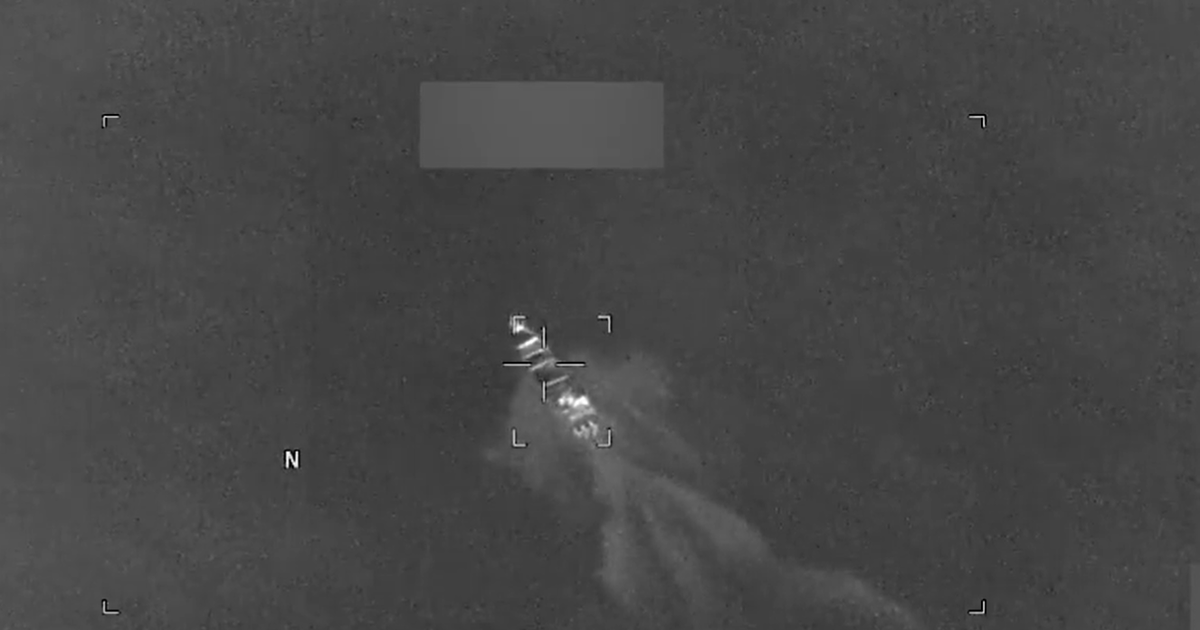
A black and white video posted on X showed a boat speeding through the water before being struck by a visible projectile and then bursting into flames.
President Trump has said the U.S. is in "armed conflict" with cartels in Latin America and has justified the attacks as a necessary escalation to stem the flow of drugs into the United States and fatal overdoses claiming American lives. But his administration has offered little evidence to support its claims of killing "narcoterrorists."
Critics of the strikes have questioned the overall legality as well as their effectiveness. Part of the argument has been that the fentanyl behind many fatal U.S. drug overdoses is typically trafficked over land from Mexico, where it is produced with chemicals imported from China and India.
U.S. lawmakers have previously demanded that the Pentagon release "unedited video" of the very first strike that the military conducted after reports emerged that the U.S. chose to conduct a follow-on strike on survivors of its initial attack.
Some lawmakers have questioned whether that follow-on strike constituted a war crime. The Defense Department and several congressional Republicans have insisted the survivors may have still been in the fight, warranting the follow-on strike.
The Pentagon's watchdog said in May that it planned to look into whether the U.S. military followed an established targeting framework when carrying out the strikes. However, the evaluation is focused specifically on what's known as the six-phase Joint Targeting Cycle and not on the legality of the strikes, the inspector general's office said.
In:
More details emerge on Sept. 2 boat strike
U.S. military used aircraft painted like civilian plane in Sept. 2 boat strike, officials say
(06:41)
