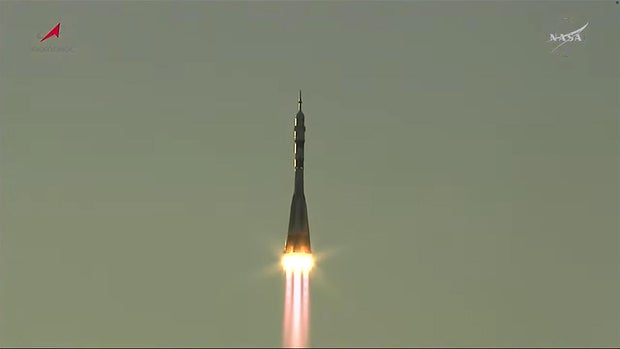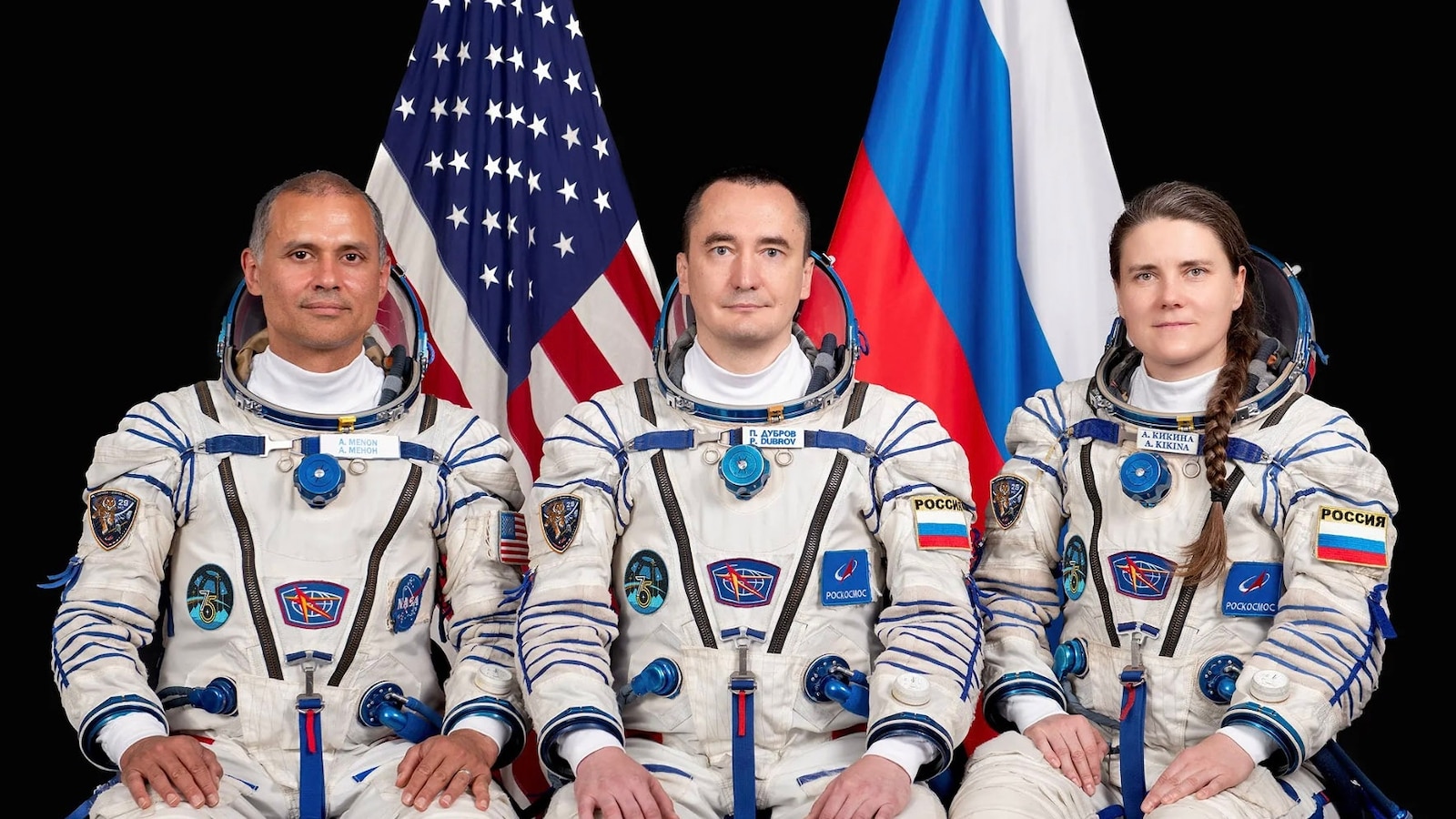
The three astronauts will spend about eight months aboard the station.
July 14, 2026, 10:54 AM
A NASA astronaut blasted off from a launch site in Kazakhstan Tuesday along with two Russian cosmonauts as part of a mission to the International Space Station.
Anil Menon launched aboard the Roscosmos Soyuz MS-29 spacecraft from the Baikonur Cosmodrome site around 10:47 a.m. ET along with cosmonauts Pyotr Dubrov and Anna Kikina.
This marks Menon's first space flight, and the second flight for the Russian cosmonauts, according to NASA.
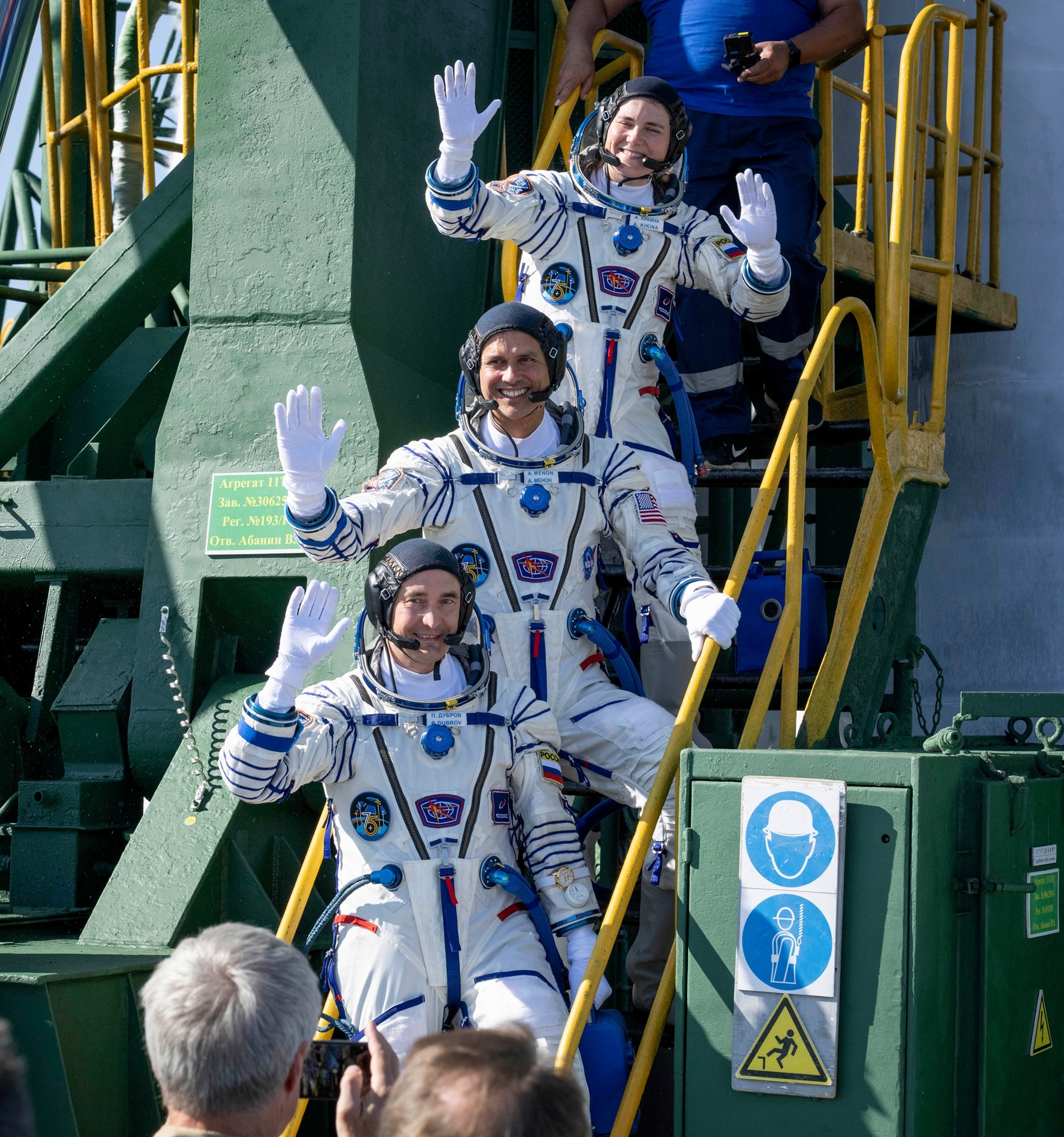
Expedition 75 Roscosmos cosmonaut Anna Kikina (top), NASA astronaut Anil Menon (C) and Roscosmos cosmonaut Pyotr Dubrov wave farewell prior to boarding the Soyuz MS-29 spacecraft for launch on July 14, 2026, at the Baikonur Cosmodrome in Baikonur, Kazakhstan.
Bill Ingalls/NASA via Getty Images
The space craft is scheduled to dock with the station around 1:56 p.m. ET, according to NASA.
Once aboard the station, they will join up with the members of Expedition 74 crew, three NASA astronauts, one European Space Agency astronauts and three cosmonauts, who have been on the station conducting scientific experiments.
Popular Reads
Menon, Dubrov and Kikina's mission will last about eight months and they are scheduled to return to Earth in April 2027.
Menon will "conduct scientific research and technology demonstrations aimed at advancing human space exploration and benefiting life on Earth," according to NASA.
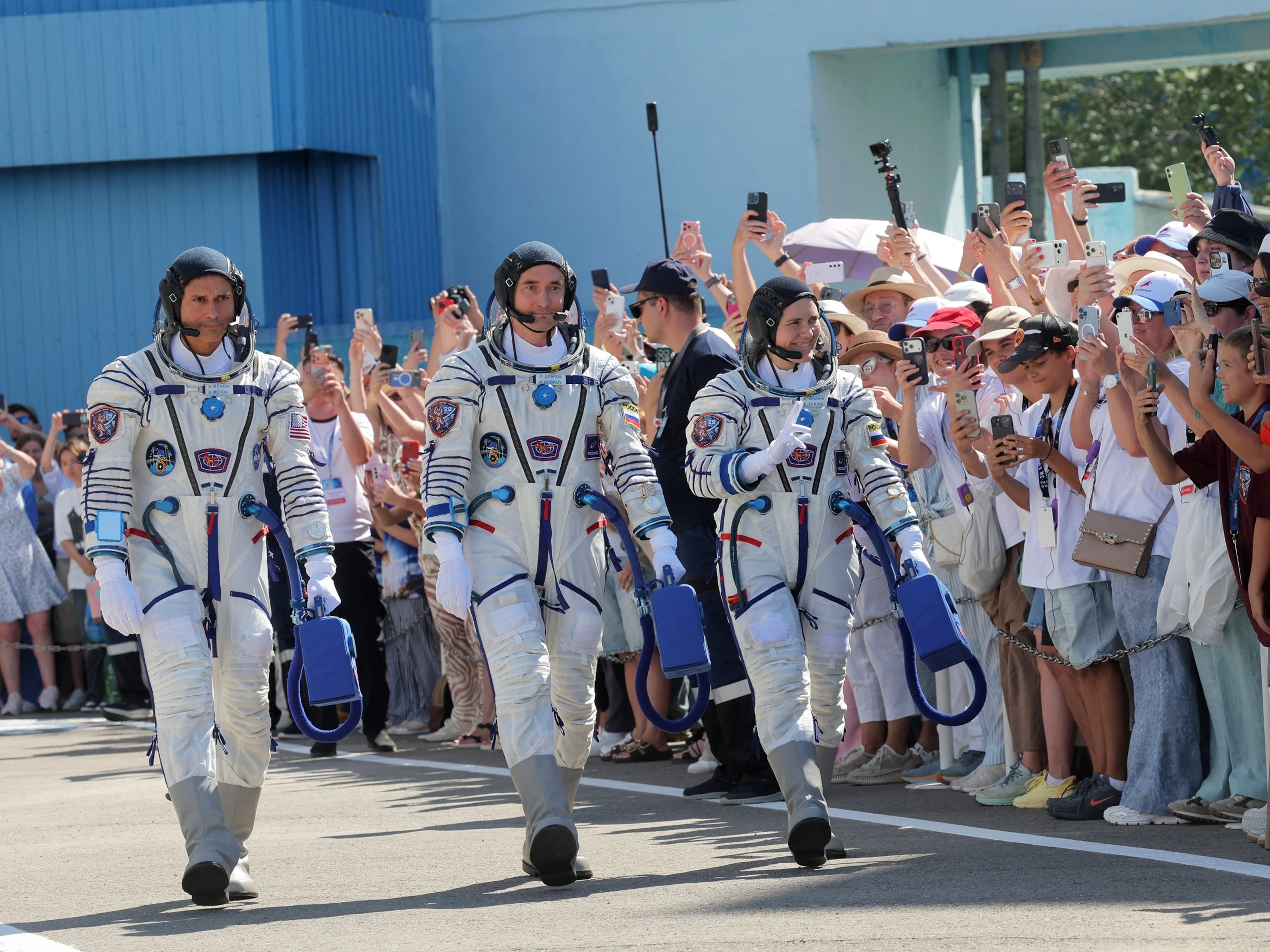
Crew members NASA astronaut Anil Menon, and Roscosmos cosmonauts Pyotr Dubrov and Anna Kikina attend a send-off ceremony before the launch of the Soyuz MS-29 spacecraft at the Baikonur cosmodrome in Baikonur, Kazakhstan, July 14, 2026.
Maxim Shipenkov via Reuters
That includes research into production of semiconductor crystals in space, and testing augmented reality and artificial intelligence tools for medical support in space, NASA said.
"He will be a test subject helping researchers understand how blood flow is affected in space to protect future astronauts. He also will test bioprinting vascular constructs in microgravity to improve understanding of the aging process to advance therapeutic developments," the agency added.