NEWYou can now listen to Fox News articles!
As reports emerge of a possible new phase of confrontation between the United States and the Islamic Republic, one reality is becoming increasingly clear: the ruling system in Tehran still does not fully believe President Donald Trump is prepared to go beyond pressure and fundamentally alter the balance of power.
History does not remember those who merely manage crises. It remembers those who confront — and dismantle — the ideologies that produce them. The 20th century proved this decisively: Nazism, fascism and communism once appeared immovable, yet each ultimately collapsed under sustained and determined pressure.
The Islamic Republic of Iran belongs in that same category. It is not a state that evolves toward moderation. It is an ideological system that sustains itself through repression, deception and expansion.
The roots of this challenge trace back to 1979’s revolt, when a profound failure of judgment in Washington reshaped the Middle East. The removal of the late Shah, Mohammad Reza Pahlavi — America’s most reliable regional ally during the Cold War — created a vacuum that was filled not by democratic forces, but by a radical clerical mafia whose nature was neither fully understood nor seriously examined. Critical warnings were dismissed. The ideological foundations of Khomeinism were underestimated. Even its core texts were never meaningfully studied by those responsible for shaping policy.
FROM HOSTAGE CRISIS TO ASSASSINATION PLOTS: IRAN’S NEAR HALF-CENTURY WAR ON AMERICANS
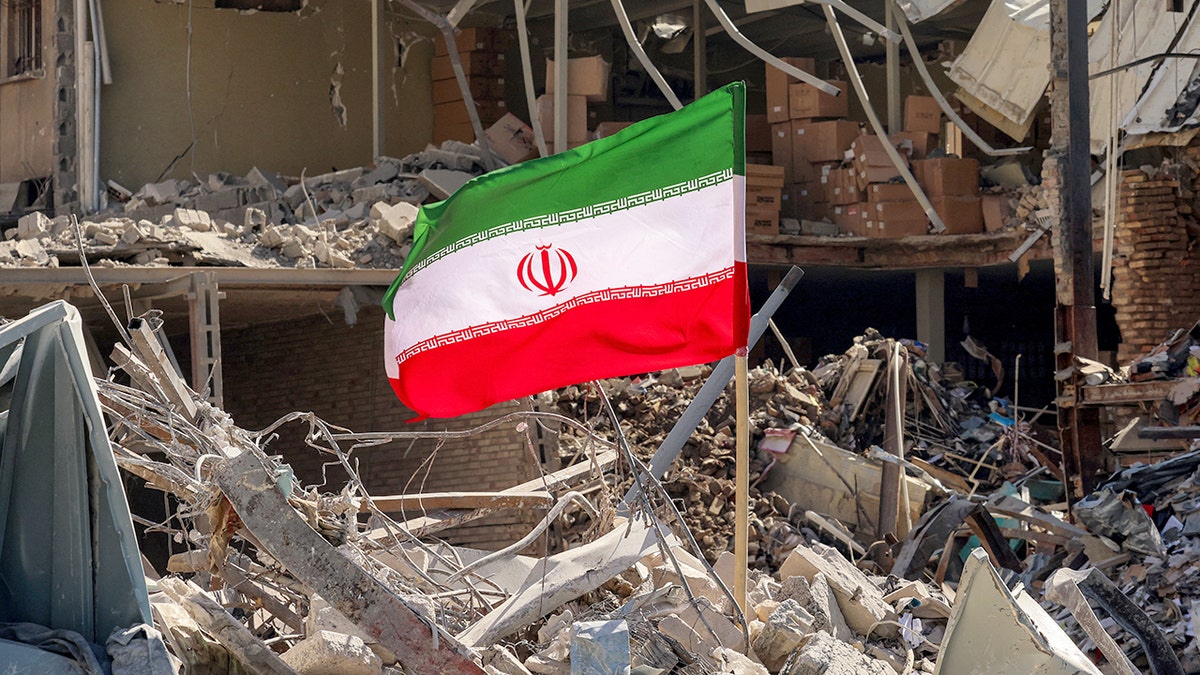
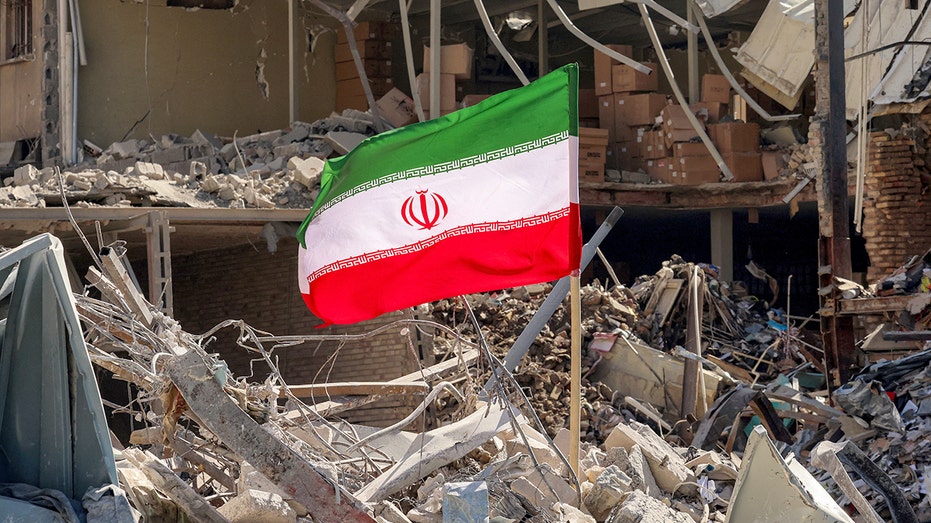
An Iranian flag is placed amid rubble and debris next to a destroyed residential building near Ferdowsi Square in Tehran on March 3, 2026. (ATTA KENARE / AFP via Getty Images)
What followed was not transition, but collapse — chaos hardening into theocratic power, and a system built on absolutism, coercion, violence and perpetual ideological expansion.
For decades, successive U.S. administrations attempted to manage this reality — through engagement, negotiation or strategic patience. The outcome was consistent: the steady expansion of a destabilizing force across the region. From Iraq to Lebanon, from Syria to Yemen, the Islamic Republic constructed a transnational terrorist network of militias and proxies, forming what is now widely recognized as the "Shia Crescent." The war on terror, launched in 2001 at immense cost, failed to confront its central engine of instability.
Then came Donald Trump — and he broke the pattern. He did not reinterpret the system; he confronted it. In doing so, he changed the balance of power.
MIKE PENCE: TRUMP AND OUR INCREDIBLE MILITARY ARE ENDING 47 YEARS OF IRANIAN TERROR
Unlike his predecessors, he refused to treat the Islamic Republic as a state actor capable of reform through diplomacy. He recognized it for what it is: the epicenter of a transnational ideological project rooted in coercion, expansion, and permanent conflict. And he acted accordingly.
The elimination of Iranian Maj. Gen. Qasem Soleimani was not simply a tactical strike. It was a strategic rupture in the modern Middle East. Soleimani was the architect of Iran’s regional Islamic terrorist network — the connective force linking proxy structures from Baghdad to Beirut. Removing him disrupted not only operations, but the regime’s sense of reach and impunity.
For the first time in years, the system — effectively a Shia Islamic caliphate centered in Tehran — was pushed onto the defensive.
TRUMP SQUEEZES IRAN WITH MAXIMUM PRESSURE — WHY IT HASN’T FORCED A BREAKTHROUGH
Trump followed this with another unprecedented decision: designating the IRGC as a terrorist organization. It exposed the regime’s core institution as what it has long been in practice — a transnational instrument of ideological warfare, not a conventional military force.
Clarity puts pressure on your adversary. Ambiguity lets it breathe. The impact was felt far beyond Washington.
For millions of Iranians — nearly 90 million people living under repression — this was not abstract policy. It was one of the rare moments when American strategy aligned with Iranian reality. For many, Trump came to represent the possibility of breaking the grip of a regime that has held the country hostage for decades.
The elimination of Iranian Maj. Gen. Qasem Soleimani was not simply a tactical strike. It was a strategic rupture in the modern Middle East.
That distinction is not semantic. It is strategic. Yet the story remains unfinished. But pressure is not resolution. At critical moments, signals of negotiation, pauses in escalation and incomplete follow-through introduced ambiguity into an otherwise clear framework. Time was given back to a system that survives on time. And the Islamic Republic has always been adaptive.
Leadership change does not alter the structure. Its ideological foundation — hostility toward the United States and Israel, reliance on proxy warfare and internal repression — remains unchanged. The eventual succession of Ali Khamenei will unfold within an institutional framework designed for continuity. Whether authority passes to his son Mojtaba Khamenei or another insider, the machinery of control will endure.
This is why partial measures fail. Remove a figure, and another emerges. Strike a facility, and it is rebuilt. Sign an agreement, and it is reinterpreted. The system absorbs impact unless something deeper breaks.
Inside Iran, the regime faces mounting internal pressure. Economic collapse and systemic corruption have become structural realities. Environmental stress is no less severe. Public anger is cumulative. The anti-regime uprisings did not disappear — they were suppressed savagely. That is not stability or legitimacy. It is compression: a machinery of repression and propaganda.
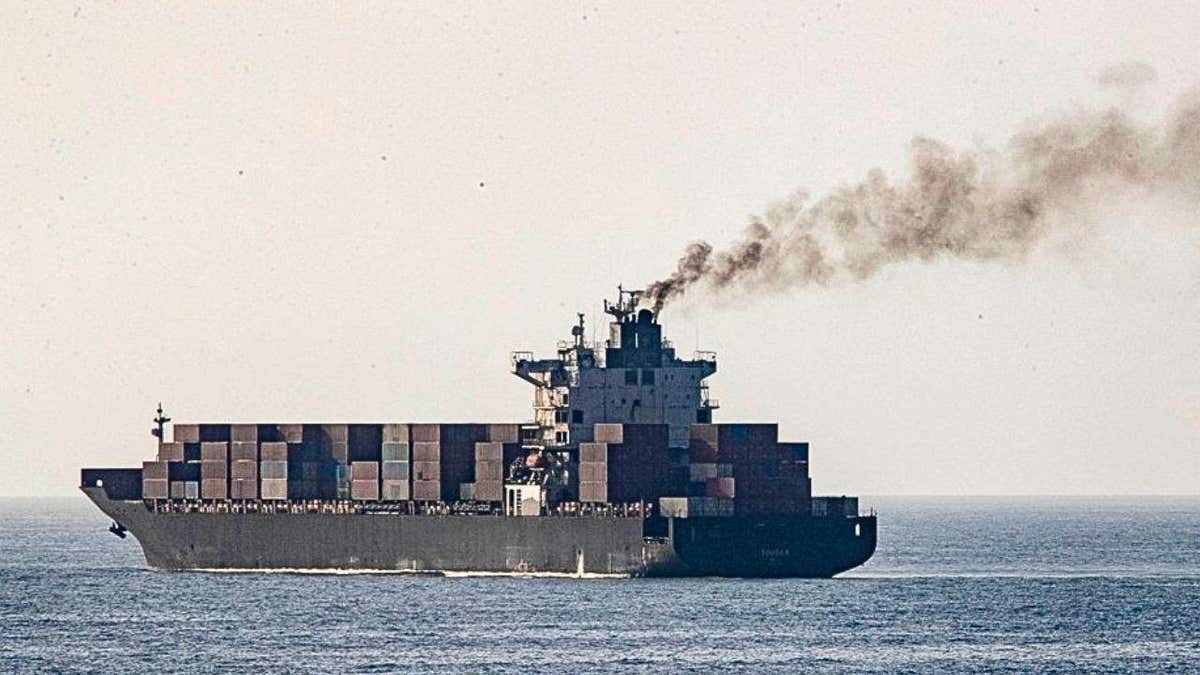
The Iranian-flagged Touska cargo ship pours smoke out after U.S. forces launched missiles at it's control room following its violation of the U.S. blockade in the Strait of Hormuz, May 20, 2026. (U.S. Central Command (CENTCOM))
Externally, the pattern is equally consistent. Iraq, Syria, Lebanon, Yemen — the map reflects design, not coincidence. Influence expands where institutions weaken. Control extends where states fragment. This is not opportunism. It is doctrine. This is not a normal geopolitical competitor. It is a system engineered for confrontation — and sustained by it.
His cooperation with Israeli Prime Minister Benjamin Netanyahu, alongside engagement with key Persian Gulf actors such as Mohammed bin Salman, Saudi Arabia's crown prince and de facto ruler, and UAE President Sheikh Mohammed bin Zayed Al Nahyan, pointed toward a reconfiguration of the Middle East. That would be one that prioritizes stability, economic development and strategic cooperation over ideological conflict. But frameworks do not change realities on their own. Outcomes do.
IRAN WAR NEARS ‘COMPLETION’ AS TRUMP EYES DEADLINE — WHAT THE ENDGAME COULD LOOK LIKE
Four decades of policy have exposed the limits of half-measures. Containment delays. Negotiation without leverage extends. Pressure without conclusion stabilizes nothing. The system in Tehran does not need victory. It needs survival.
Transition, however, carries risk. Collapse would not be orderly. Networks would fragment. Some would disappear. Others would adapt. Power vacuums are never empty; they are invitations to conflict.
For many, Trump came to represent the possibility of breaking the grip of a regime that has held the country hostage for decades.
The role of international actors — particularly coordination between the CIA and regional allies — would be critical in managing such a transition. At the same time, a credible national alternative — such as Iranian Crown Prince Reza Pahlavi — could provide continuity at a moment when fragmentation is most likely.
IRAN REGIME FACES 'BEGINNING OF THE END' AS EXILED CROWN PRINCE SEES 'GOLDEN OPPORTUNITY'
A stable, sovereign Iran — integrated into the international system — would fundamentally alter the balance of power in the Middle East. It would reduce proxy conflicts, strengthen economic ties and contribute to long-term regional stability. By contrast, the continuation of the current regime guarantees ongoing instability, conflict and strategic tension — a system that reproduces crisis as a method of survival.
If Trump completes what he started — transitioning from mere pressure to decisive structural change — his legacy will be cemented alongside those who dismantled the defining threats of their era. If not, the opportunity may pass once again. The regime of Shia mullahs will endure, and the cost of that endurance will not be abstract. It will be measured in instability, in conflict, and in the persistence of a regime that has already shaped the Middle East for nearly half a century.
For many Iranians, Trump has become a symbol of resistance to a regime they have long sought to see end. For now, Iran stands at a crossroads. And so does history. But crossroads do not determine outcomes. Decisions do.
IRAN REGIME ESCALATES REPRESSION TOWARD 'NORTH KOREA-STYLE MODEL OF ISOLATION AND CONTROL'
To hide the scale of its abuses, the Shia clerical regime imposed near-total internet blackouts and sweeping censorship to suppress dissent. Trump repeatedly drew attention to the suffering inside Iran and to the scale of the repression. Meanwhile, millions inside the country remain cut off, silenced and isolated. When the internet flickers back, even briefly, it feels like a fragile signal from a society still struggling to be heard. The question is whether hope can still endure.
CLICK HERE FOR MORE FOX NEWS OPINION
Trump also understands that the Iranian people should not be left alone against figures such as Gholam-Hossein Mohseni-Eje'i, the head of the judiciary, and IRGC commander Ahmad Vahidi, whose machinery of repression and propaganda continues to operate against the population until the very end of the regime. That is precisely why Trump’s name carries weight in the Iranian public imagination — whether one supports him or not, this reality cannot be ignored.
Inside Iran, the regime faces mounting internal pressure. Economic collapse and systemic corruption have become structural realities. Environmental stress is no less severe. Public anger is cumulative.
The leadership in Tehran still appears convinced that Washington ultimately fears escalation more than the regime fears collapse. That assumption may become the most dangerous miscalculation in the modern Middle East.
CLICK HERE TO DOWNLOAD THE FOX NEWS APP
If the Islamic Republic continues testing American resolve, the next confrontation may no longer resemble calibrated deterrence. It may become the moment that determines whether Trump’s Iran doctrine was merely pressure — or the beginning of historic change.
History will not remember pressure alone. It will remember whether it led to change.
CLICK HERE TO READ MORE FROM ERFAN FARD
Erfan Fard is a Washington, D.C.–based counterterrorism analyst specializing in Iranian intelligence and security structures, with a particular focus on the Islamic Revolutionary Guard Corps. His research examines the regime’s decision-making networks, covert operations and regional strategy. He has appeared on CBS News, Time, international Arabic TV channels, and his analyses have been featured in The Hill, The Dallas Morning News, The Jerusalem Post and Israel Hayom.