NEWYou can now listen to Fox News articles!
A bipartisan effort to make Daylight Saving Time permanent is one step closer to becoming law after the House of Representatives overwhelmingly approved the measure on Tuesday.
Lawmakers voted 308-117 to pass the Sunshine Protection Act, which would allow states to voluntarily observe Daylight Saving Time year-round as a growing mass of lawmakers push to extend daylight into the evening hours.
"For decades, we have accepted this ritual of springing forward and falling back, even though it disrupts routines, throws off our sleep, and creates unnecessary frustration for families across the country," Rep. Kat Cammack, R-Fla., said Tuesday, detailing how the clock changes have disrupted her infant son's sleep schedule.
"Let's stop asking Americans to reset their clocks every March and November," she continued. "Let's provide some certainty and consistency, and a little more sunshine at the end of the day."

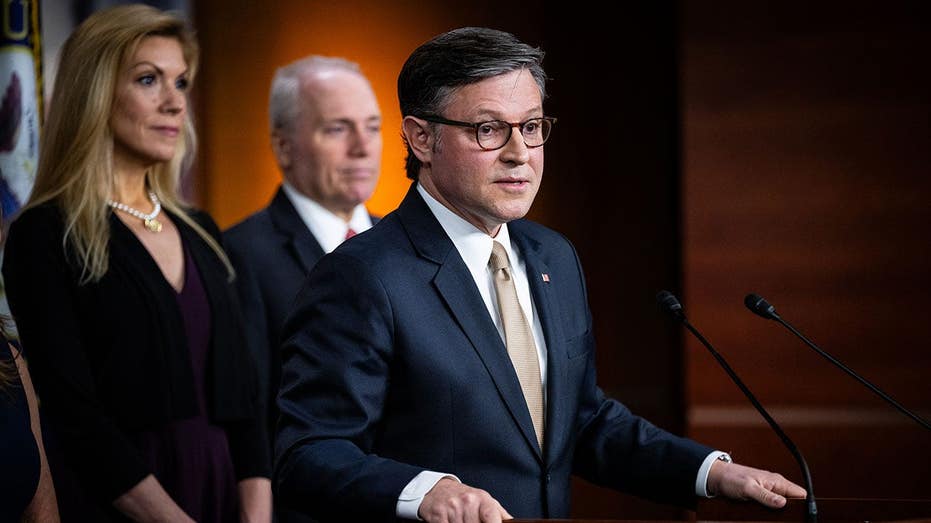
House Speaker Mike Johnson, R-La., attends a news conference at the U.S. Capitol in Washington, D.C. (Graeme Sloan/Bloomberg via Getty Images)
TRUMP-BACKED DAYLIGHT SAVING TIME BILL CLEARS KEY HOUSE HURDLE
The legislation divided lawmakers in both parties, with members largely from coastal areas, such as Louisiana, Florida and New Jersey, supporting permanent Daylight Saving Time and others from the Midwest and agriculture-heavy states opposing it.
Democrats were nearly evenly split, with House Minority Leader Hakeem Jeffries, D-N.Y., voting "no." Just 22 Republicans voted in opposition, including Reps. Bryan Steil, R-Wis., Rick Crawford, R-Ark., Ryan Zinke, R-Montana, and Harriet Hageman, R-Wyo.
The measure now heads to the Senate, where its prospects remain uncertain amid skepticism from members of both parties. President Donald Trump, who has long called for ending the twice-a-year clock changes, is expected to sign the bill if it reaches his desk.
The White House urged lawmakers to support the Sunshine Protection Act in an internal memo sent to Hill offices Tuesday, calling it a "popular, common-sense reform."
Nearly every state follows the practice of setting clocks forward one hour in March to preserve more evening daylight before "falling back" one hour in November.
But nearly 20 states have already approved legislation to make Daylight Saving Time permanent if Congress authorizes the practice. Hawaii and most of Arizona, however, do not observe Daylight Saving Time.
Proponents argued the legislation, authored by Rep. Vern Buchanan, R-Fla., was necessary to end disruptions caused by switching clocks, including to children's routines and road safety, while arguing longer daylight would boost tourism and outdoor recreation.
"More evening sunshine means more time with family and more time to enjoy our local restaurants, shops, and everything Florida has to offer," Rep. Maria Elvira Salazar, R-Fla., wrote on social media. "It’s common sense. Let’s get it done."
Some lawmakers, however, argue that year-round Daylight Saving Time would delay winter sunrises until after 9 a.m. in some parts of the country, raising safety concerns about darker morning commutes and economic challenges for farmers who would likely have to start work later.

Texas rice farmer LG Raun stands in El Campo, Texas, on Tuesday, Jan. 6, 2026. (Mark Felix/Bloomberg via Getty Images)
SLEEP DOCTOR REVEALS THE BRUTAL HEALTH DOWNSIDE OF DAYLIGHT SAVING TIME
Detractors have also stated that permanent standard time — meaning more light in the mornings — better aligns with circadian rhythms.
"If we’re going to make a permanent change that affects every American, we should follow the science and prioritize Americans’ health, particularly that of the children," Rep. Mary Gay Scanlon, D-Pa., who favors permanent standard time, said during debate Monday.
Scanlon also pointed to the nation's brief experiment with year-round Daylight Saving Time in 1974, which Congress reversed after widespread public backlash.
Tuesday’s vote comes as the semiannual clock change remains widely unpopular with Americans, according to recent polling.
An AP-NORC survey released in December found that just 12% of Americans favor the current daylight saving time system, with nearly half opposed. Another 40% of respondents had no opinion.
The survey also found that more Americans support having Daylight Saving Time year-round compared to standard time by a 14-point margin.
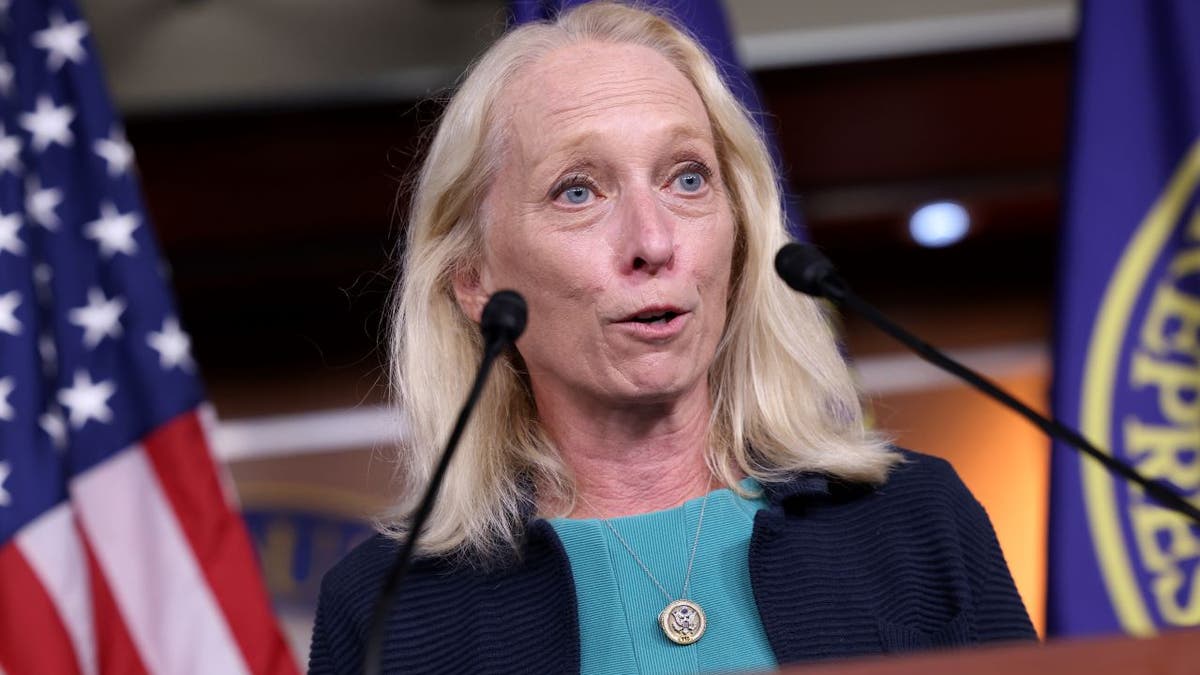
Rep. Mary Gay Scanlon, D-Pa., argued that permanent Daylight Saving Time would create significant health and safety risks for children, who would likely go to school during darker morning hours.
CLICK HERE TO DOWNLOAD THE FOX NEWS APP
The Senate previously passed year-round Daylight Saving Time legislation in 2022, but the measure failed to clear the House.