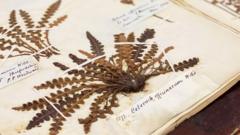

More than 10,000 specimens are held at the Royal Agricultural University herbarium in Cirencester
A "hidden" record of UK's historic biodiversity including flowers picked two centuries ago with links to Charles Darwin is being digitised.
More than 10,000 dried and pressed specimens held at the Royal Agricultural University (RAU) herbarium in Cirencester, Gloucestershire, are being photographed and digitally catalogued to make them more accessible to researchers.
Described by RAU as a "time-capsule record of biodiversity in the UK", researchers said the possibilities are endless, branching out into climate change, habitat management, genetics, and much more.
Dr Kelly Hemmings, from the RAU, said it will allow the herbarium to "really make a global impact in research".
She added: "Until it is digitised, and the metadata collated, we have no way, other than manually sifting through the handwritten sheets, to know exactly what the collection holds, so this rich seam of data is effectively 'hidden' natural heritage."
It will be included in a £155m national scheme to connect around a million specimens in collections across the UK.
Herbarium sheets are a way of preserving plants and flowers on paper and were first made in Italy in the 15th Century. If properly conserved, they can last for hundreds of years.
The herbarium at RAU, not only includes specimens from 1797, but many picked from in and around the Gloucestershire area.
Geologist Samuel Pickworth Woodward, who was a professor at the college in the 1800s and a correspondent of Charles Darwin, collected many of the plants and flowers.

Dr Kelly Hemmings said the herbarium can help piece together "patterns of biodiversity change" over the last two centuries
Hemmings, RAU associate professor in ecology, said the "immense value" of historic herbarium collections for "tackling current environmental issues" is now being recognised.
"The RAU's collection is unusual in being an early example established at an agricultural education institution," she said.
"Our specimens give the location and date at which they were collected helping us to piece together patterns of biodiversity change over the last two centuries."

Plant collectors generally took plants when the species were at their peak flowering, for the herbarium
Over the next two years, it is hoped that more than 1.2 million specimen records from 23 museums and herbaria will be added to a central England hub.
RAU said by digitising its treasure trove of historic records, plants today can be compared with plants pressed hundreds of years ago so any shifts in flowering times caused by climate change can be tracked.
It will also ensure the collection is protected for future generations.
Hemmings said she was "delighted" this "rich seam of data" will be included in the hub.
While Cassie Newland, RAU associate professor of cultural heritage, said it will "unlock" valuable information for international study.
"Archives are only useful if we can get the information out of dusty drawers and into current research, teaching, and wider conversations," Newland added.
Get in touch
Tell us which stories we should cover in Gloucestershire