Vanessa BuschschlüterLatin America online editor

 Cancillería Bolivia
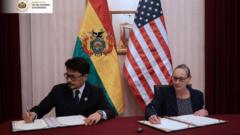
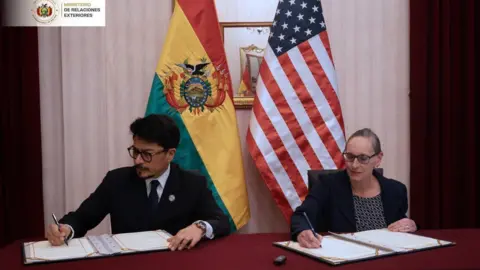
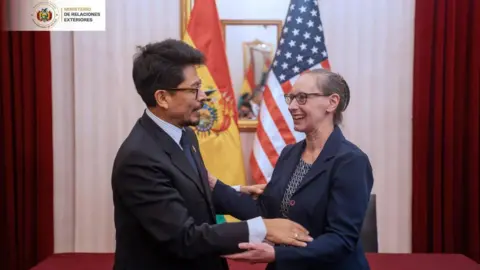
Bolivia says it has signed a new co-operation deal with the US to combat drug trafficking.
The foreign ministry said that under the agreement, the US would provide up to $20m (£15m) to train and equip Bolivian forces as part of a joint fight against drug smuggling.
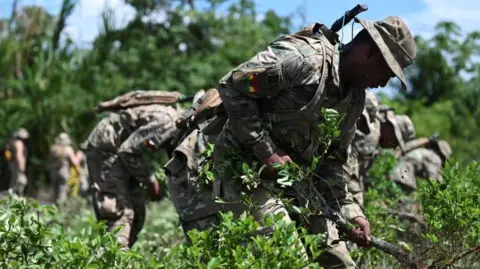
The deal is the latest sign of thawing relations between the nations - 18 years after then-President Evo Morales expelled the US Drug Enforcement Administration from the South American country, which is the world's third-largest producer of coca, the raw material used to make cocaine.
Under a new centrist president, Rodrigo Paz, Bolivia has joined the Shield of the Americas, the US-led security initiative in the Western Hemisphere.
AFP news agency said that the US embassy had confirmed that the "United States will work closely with the Bolivian government to provide training, equipment, and other forms of support". The BBC has contacted the embassy for comment.
Bolivia's foreign affairs ministry said the aim of the agreement was to strengthen Bolivian institutions tasked with public security, criminal investigations and the fight against organised crime.
 Cancillería Bolivia
It was signed in La Paz less than two weeks after the Bolivian president named the country's "drug czar" Ernesto Justiniano as the new defence minister.
In March, Paz joined another 12 regional leaders at the inaugural "Shield of the Americas" summit in Florida, hosted by US President Donald Trump.
The countries which form part of the alliance have provided strong backing for Paz over recent weeks as he is facing a wave of anti-government protests.
On 21 May, they released a joint statement saying that they "stand with the government of Bolivia" and expressed their "deep concern with the protests and road blockades aimed at subverting the constitutional order and destabilising the democratically elected government".
However, the main aim of the coalition is to combat "narco-terrorism".
As part of his avowed goal to keep drugs from reaching the US, Trump has also instructed US forces to target vessels alleged to be smuggling illicit substances.
More than 200 people have been killed in US strikes on boats in the Caribbean and the Pacific since the beginning of September, with some legal experts arguing that the strikes could be in violation of international law.
In the most recent strike, which US Southern Command (Southcom) said happened on Tuesday, one man on board was killed, while two survived.
Southcom said that "intelligence confirmed the vessel was engaged in narco-trafficking operations" but did not share publicly any evidence to that effect.
 REUTERS/Claudia Morales